

I am a full-time artist, creator, writer, film director and electrical engineer — someone who believes there is a place for every piece of art in the world.

Emotions in Color, Stories on Canvas
Painting Portfolio
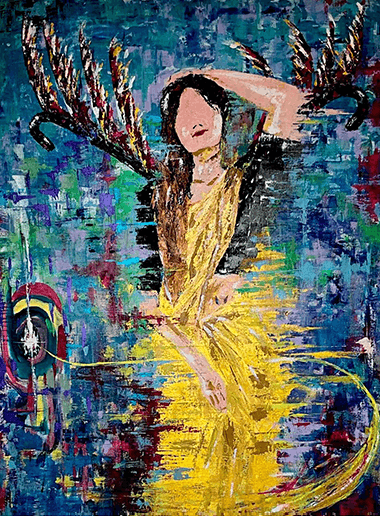
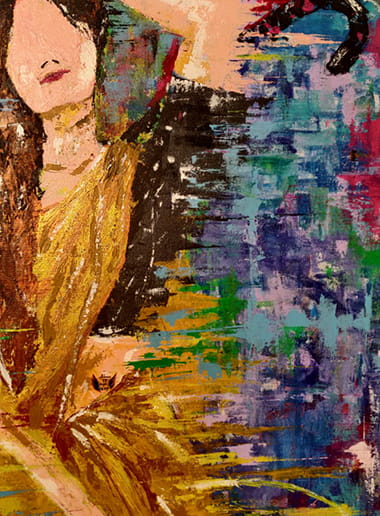
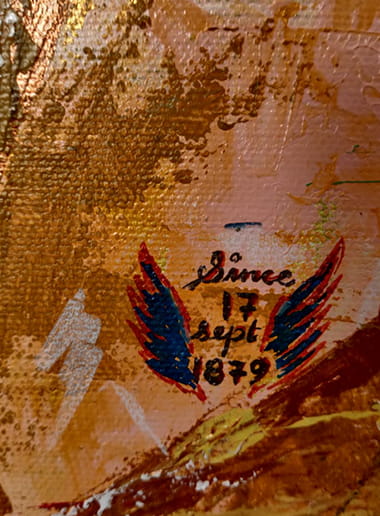
WINGED
Acrylic on Canvas
90cm x 120cm
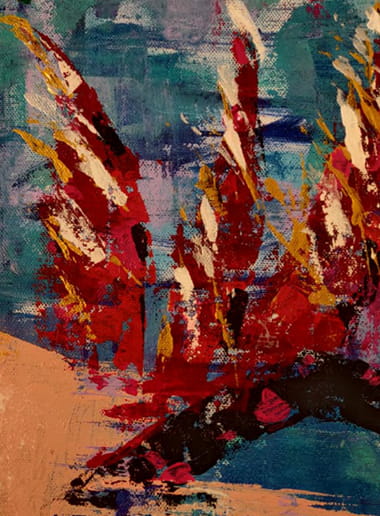
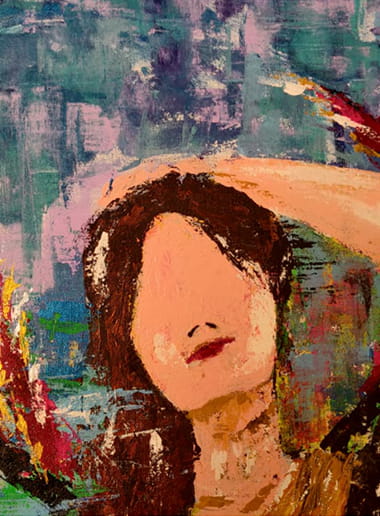
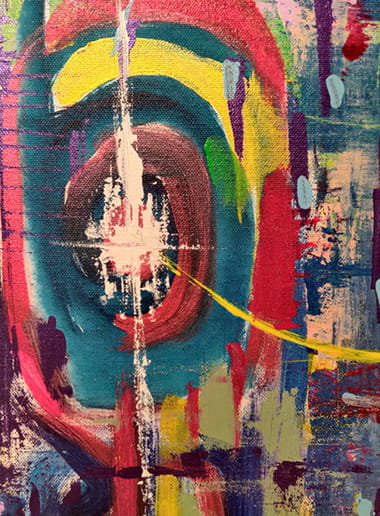
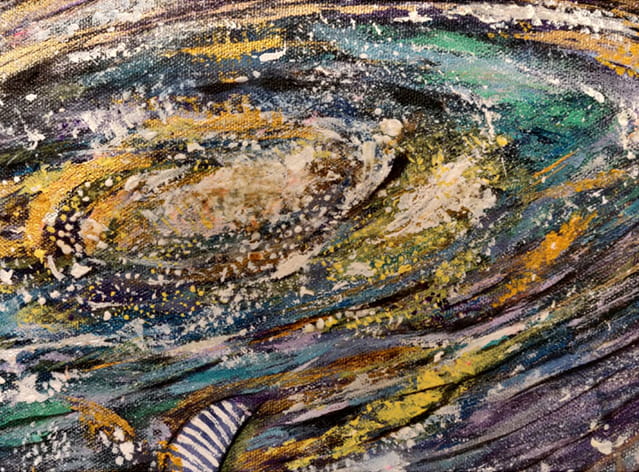
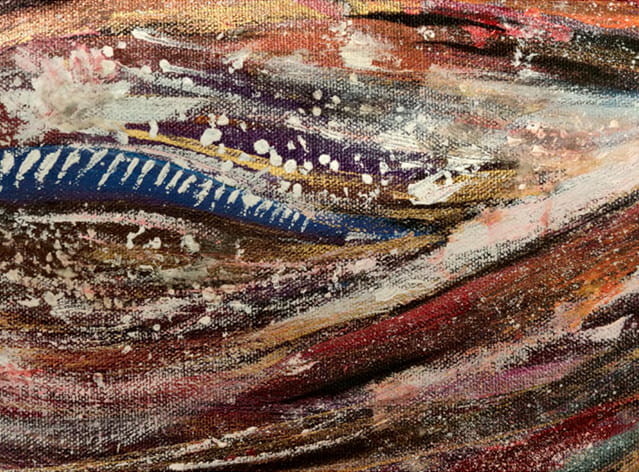
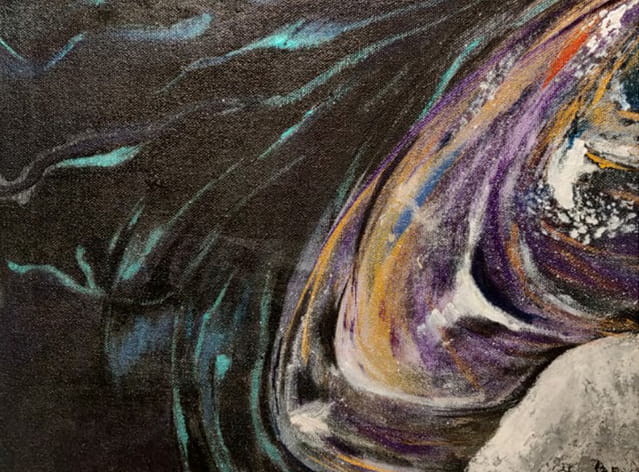
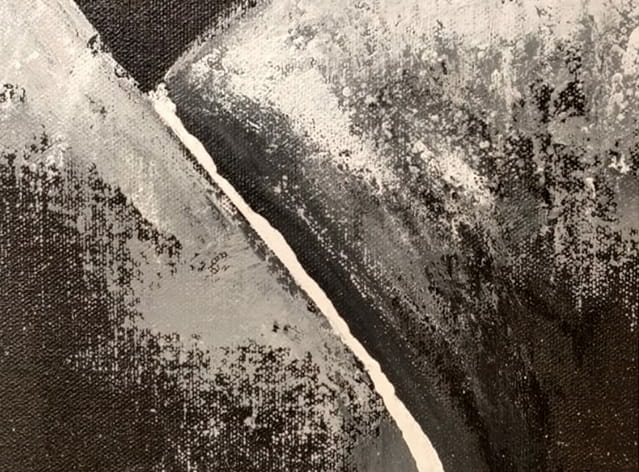
Winged represents women trapped in golden cages, not better than prisoners trapped in dungeons. Some even look pretty with no free reign, with wings clipped invisible to the naked eye. In the name of honor, in the name of everything that brings them a dollar, in name of everything that suppresses their voice; a collective symbol of suppressed voices across generations.
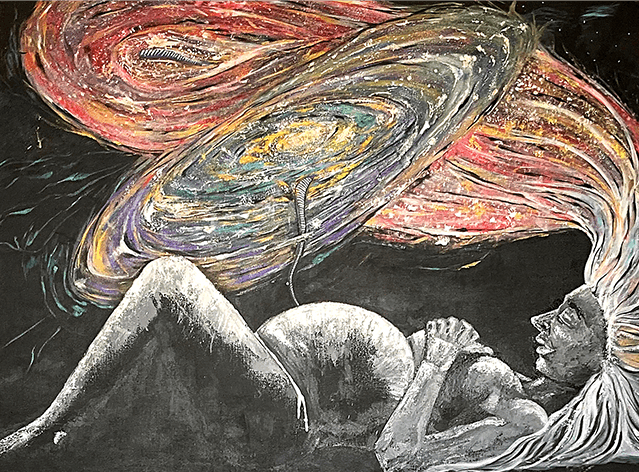
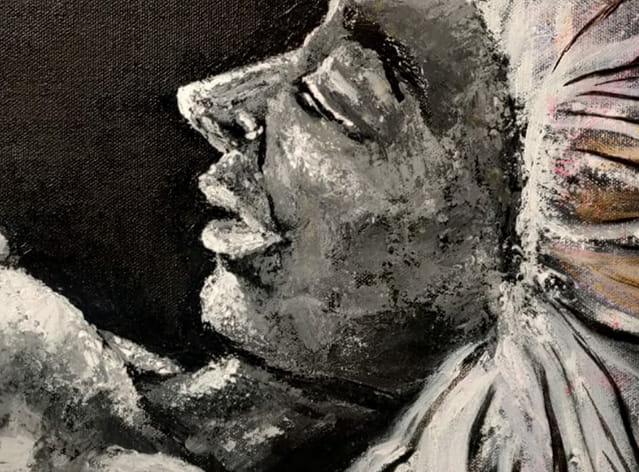
Madre_
Acrylic on Canvas
90cm x 120cm
She carries her child as though carrying the universe itself — a cradle that holds dawn, ocean, and sky. Her body is both vessel and cosmos, A Hymn of Endless Giving where love becomes the axis of the world.
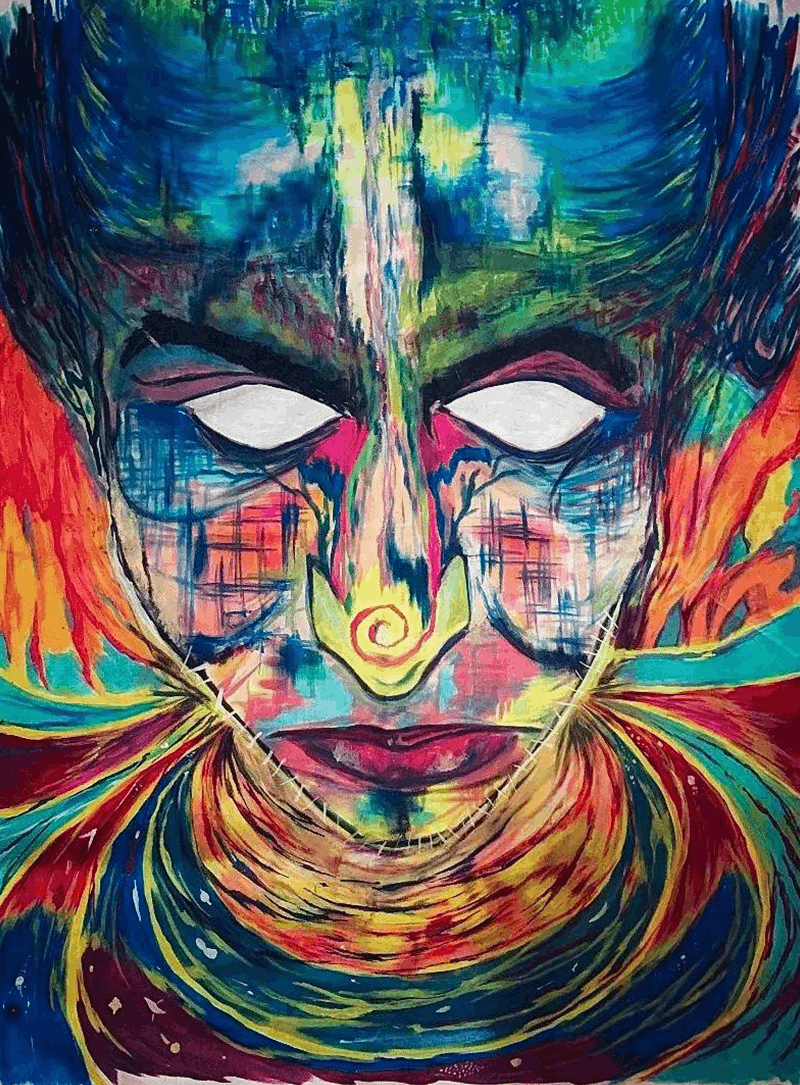
SCREAM
Acrylic on Canvas
90cm x 120cm
Scream is a painting with an explosive palette which transforms a face into a vivid landscape of thought; erupts with chromatic intensity, a portrait that is less of a face and more of a psychic landscape. The artist has not painted a likeness but rather a state of being, an inner storm externalized.
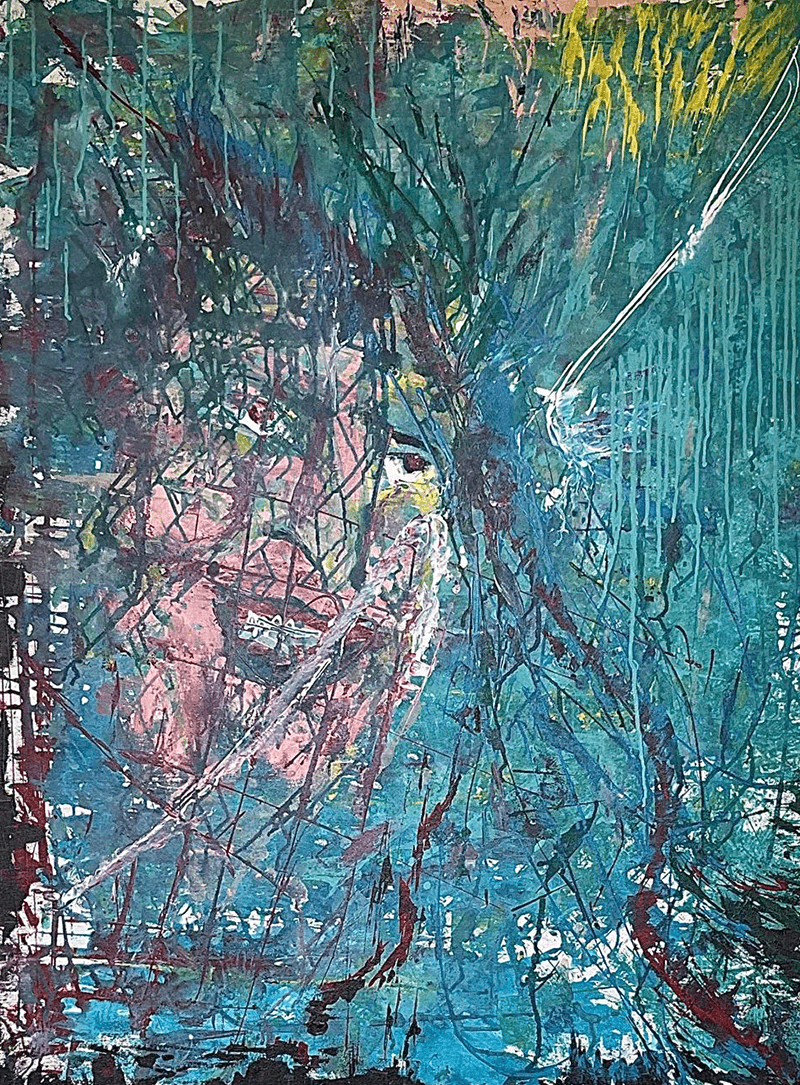
Anxiety of Color
Acrylic on Canvas
90cm x 120cm
The title Anxiety of Color crystallizes the work's dual function. It is at once an exploration of the emotional potency of hue and an evocation of how the mind, under strain, experiences the world as heightened, fractured, and unstable. It stands as a portrait of psychological landscape — a reminder that anxiety is not absence of control but an excess of it, an overwhelming layering of signals that the mind struggles to resolve.

My Galaxy
Acrylic on Canvas
90cm x 120cm
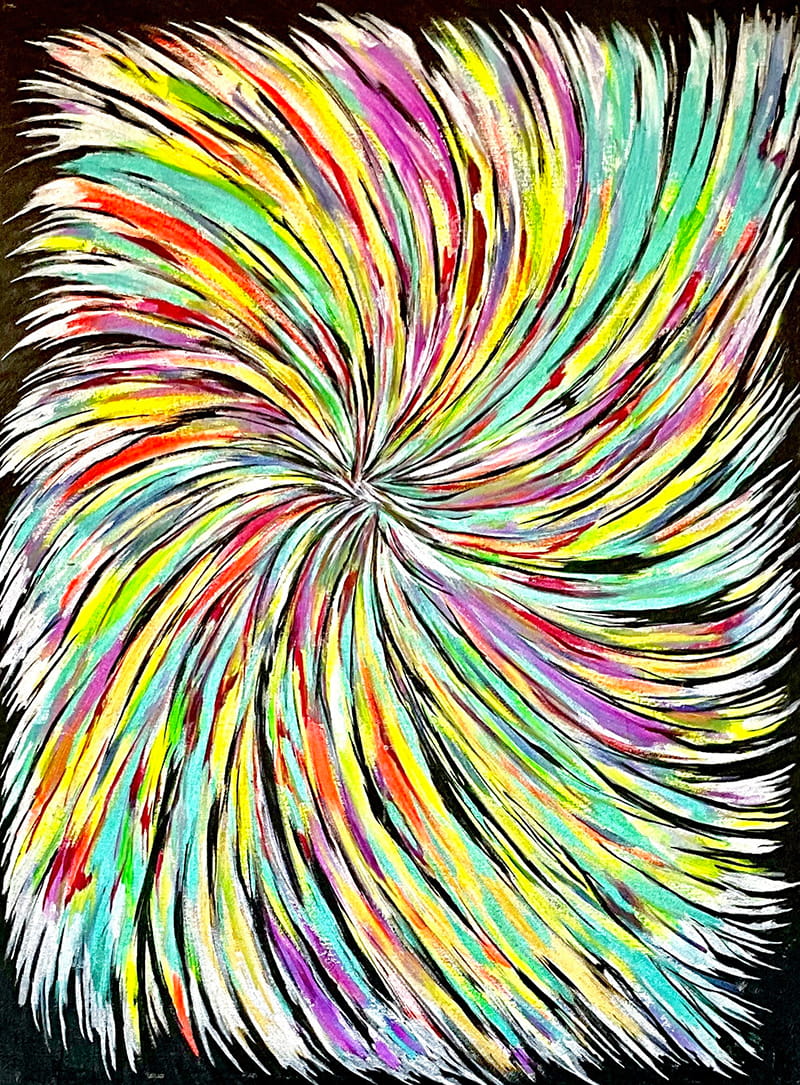
Celestial Torrent
Acrylic on Canvas
90cm x 120cm
Celestial Torrent radiates outward from a dark center, a burst of chromatic energy that feels at once destructive and liberating. Each stroke becomes a feathered flame — turquoise, crimson, violet, white, unfurling in every direction, collapsing the boundary between implosion and explosion. The vortex suggests both the violence of collapse and the beauty of release, pulling the viewer into its gravity. It embodies the paradox of chaos: that within disorder lies rhythm, and within intensity, a strange calm. This painting is less a static image than a moment of becoming, captured in relentless motion
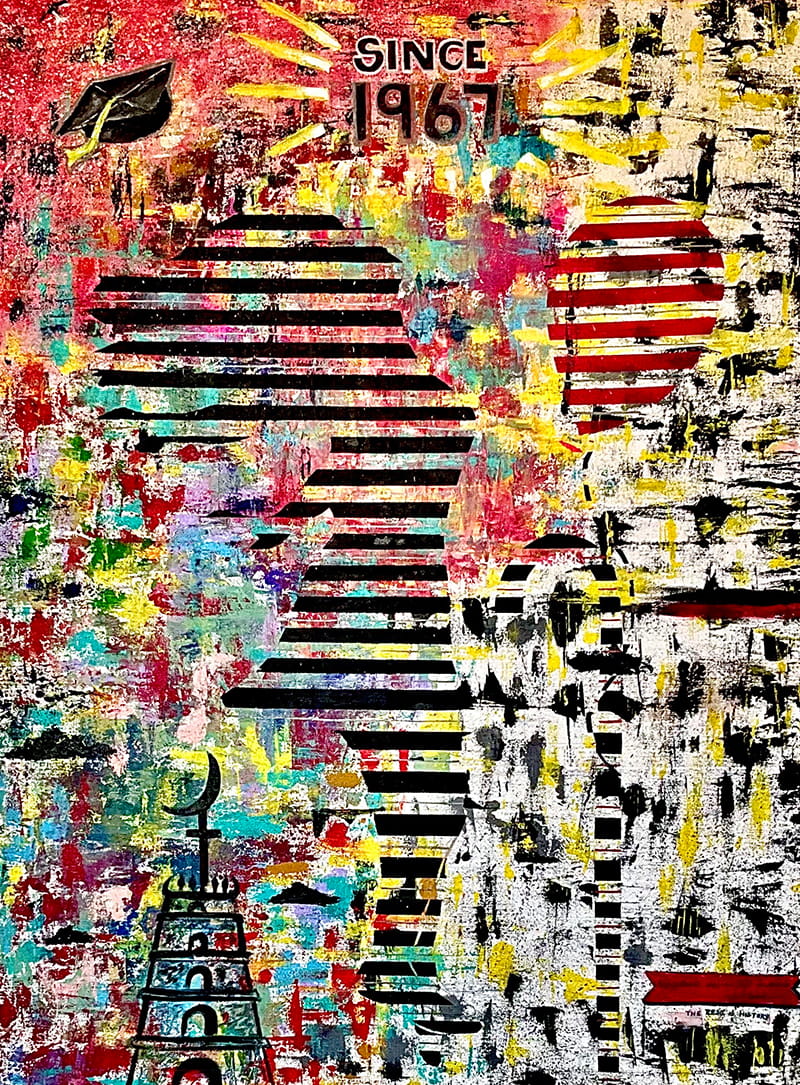
The Contested Landscape
Acrylic on Canvas
90cm x 120cm
An explosive palette of color and chaotic gesture sets the stage for unresolved tension. The Contested Landscape is a work rooted in the complexities of memory and emotional intensity. The stark geometric forms—the caged silhouette, the powerful red circle—clash violently with the abstract background, a visual metaphor for the ongoing conflict between structured power and the fluid, unfiltered human experience. Religious and national signifiers appear in isolation, failing to unify, instead emphasizing a state of fragmentation and division. The painting doesn't offer a likeness of a place or person, but an inner storm externalized, a reminder that social conflict is never an external event, but a deep, overwhelming layering of signals the mind struggles to resolve. This is art as confrontation, unafraid to expose the enduring scars of history.
Voices Unleashed
Acrylic on Canvas
90cm x 120cm
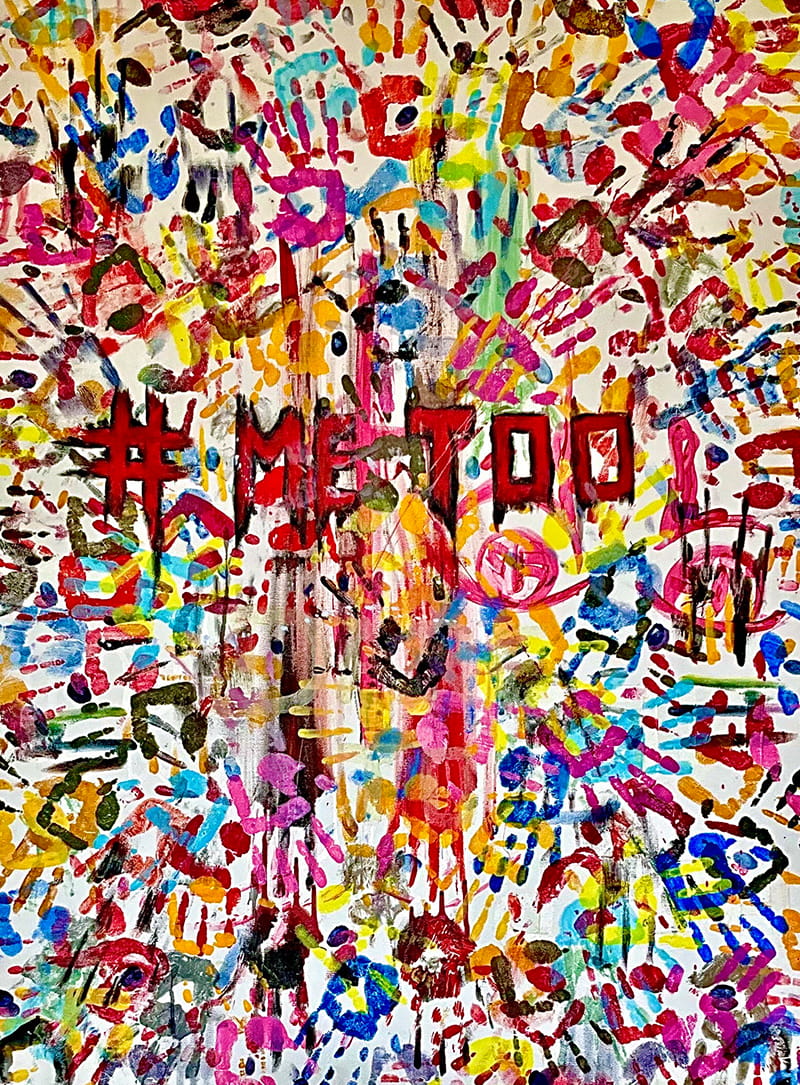
Voices Unleashed is a raw, restless, and unfiltered canvas that captures the fury and collective spirit of a social reckoning. The surface is densely layered with multi-colored handprints and visceral smears, a literal and symbolic depiction of the resilience of women and hidden stories brought to the surface. The bold, central inscription is an urgent, non-negotiable demand for dialogue. The handprints, chaotic yet undeniably present, function as a collective symbol of suppressed voices across generations finally made visible. This work rejects the idea of art as decoration; it is a profound confrontation, insisting that pain and solidarity are universal. It is a visual outburst of emotion, loud and unafraid to disturb comfort.

Vibrant Mythos
Acrylic on Canvas
90cm x 120cm
Vibrant Mythos is an unfiltered exploration of how cultural and religious identity intersects with internal emotional chaos. The traditional devotional form of Ganesha is rendered in a stark, minimalist outline, existing in a dark void—a quiet, reflective point amidst overwhelming intensity. This figure is confronted by an explosive, unrestrained eruption of color and chaotic traditional motifs. The hyper-saturated, clashing hues and dynamic forms embody the psychic landscape of the artist, where fragmentation and transformation are constant forces. It is a visual dialogue between the search for wholeness (represented by the deity) and the reality of the divided, overwhelmed self. The work challenges the notion of fixed belief, asserting that even the most sacred symbols are subject to the raw, restless energy of human emotion.
Meera_
Acrylic on Canvas
90cm x 120cm
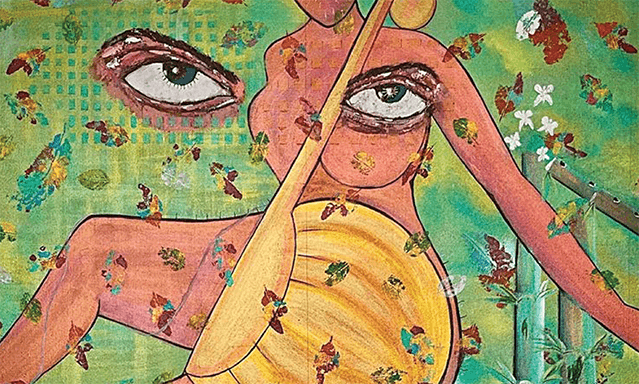
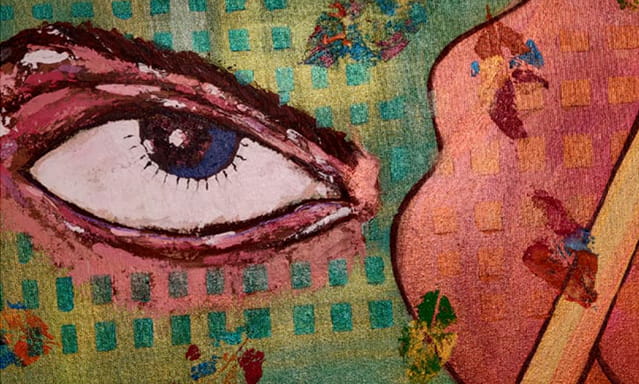
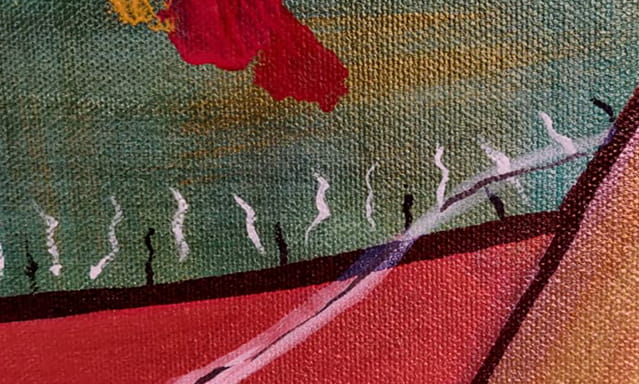
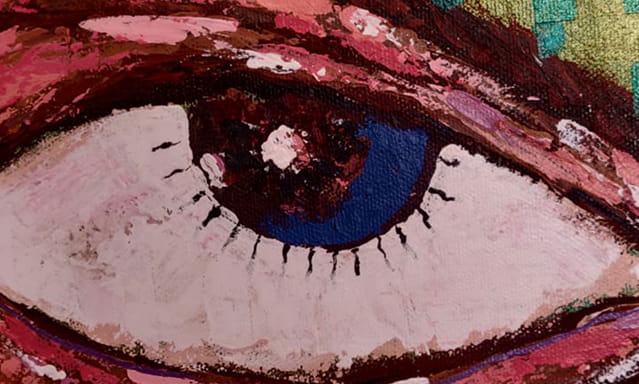
Meera_ destabilizes the viewer with its surreal fragmentation of the female body. The torso becomes a canvas of scrutiny: oversized, disembodied eyes are imposed upon the woman’s chest, signifying how her body is never her own but perpetually surveilled. She is both subject and object, forced into a gaze she cannot escape. This embodiment of the “male gaze” is literalized here — the woman is made into a spectacle, her identity overwritten by others’ watchfulness.
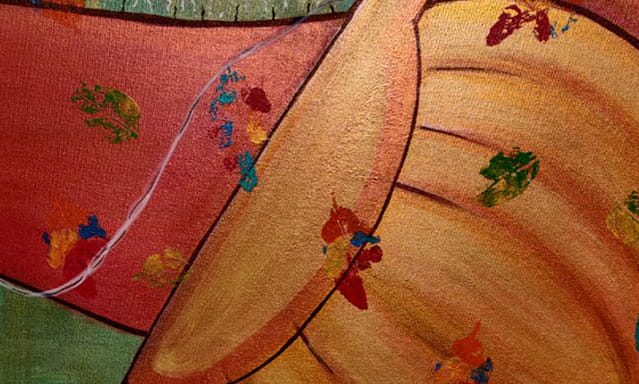
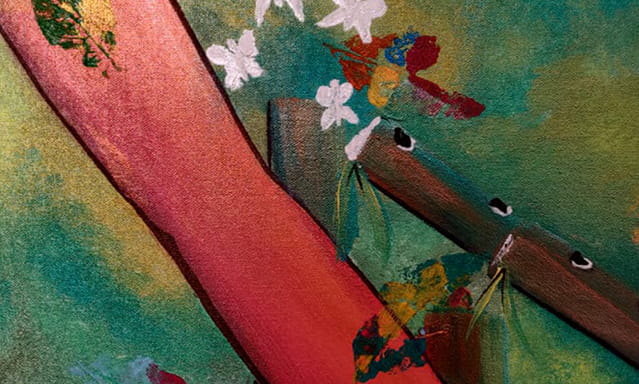
The scattered leaves across the canvas evoke fragility, as though she is dissolving into nature itself. On closer inspection, they suggest a covering-up — a camouflaging of discomfort, an aesthetic veneer over systemic violence. The background of shifting greens and yellows appears fertile and lush, yet it accentuates how the woman’s existence is tied to cycles of life she may not control.
Echoes of Humanity
Acrylic on Canvas
58cm x 78cm
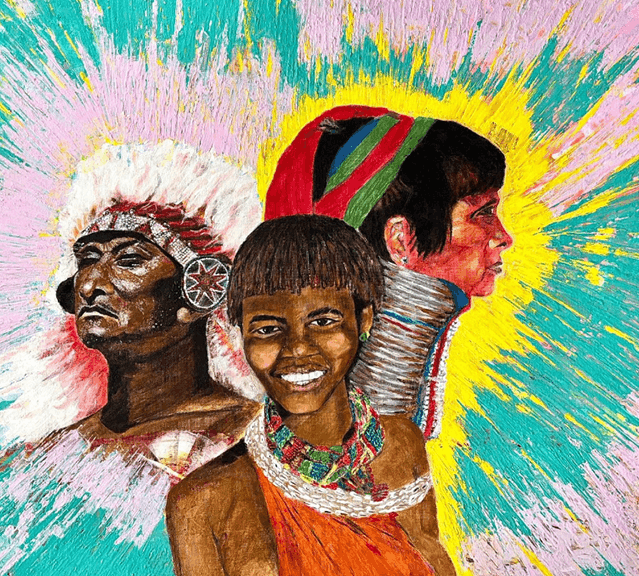
Echoes of Humanity_ represents a vivid celebration of cultural identity and shared human spirit. Blending ethnographic detail with expressive abstraction, the painting resists confinement to any single culture, instead offering a universal truth — that humanity’s greatest strength is its diversity, and its greatest beauty is its shared light.
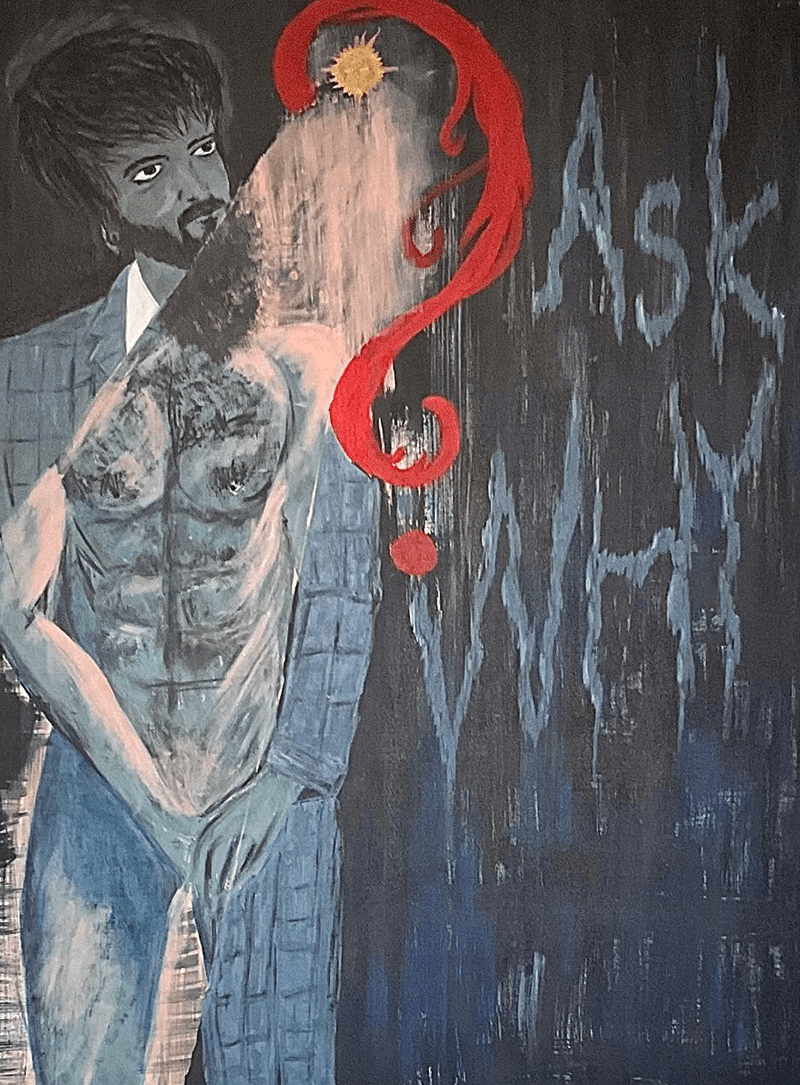
WHYYY
Acrylic on Canvas
90cm x 120cm
Why is a painting which is less a representation than an injunction: to evolve, one must ask.
Every leap forward, from the discovery of fire to the decoding of the genome, began with an unquiet mind daring to disrupt the silence with "why?"
To refuse the question is to accept stagnation.
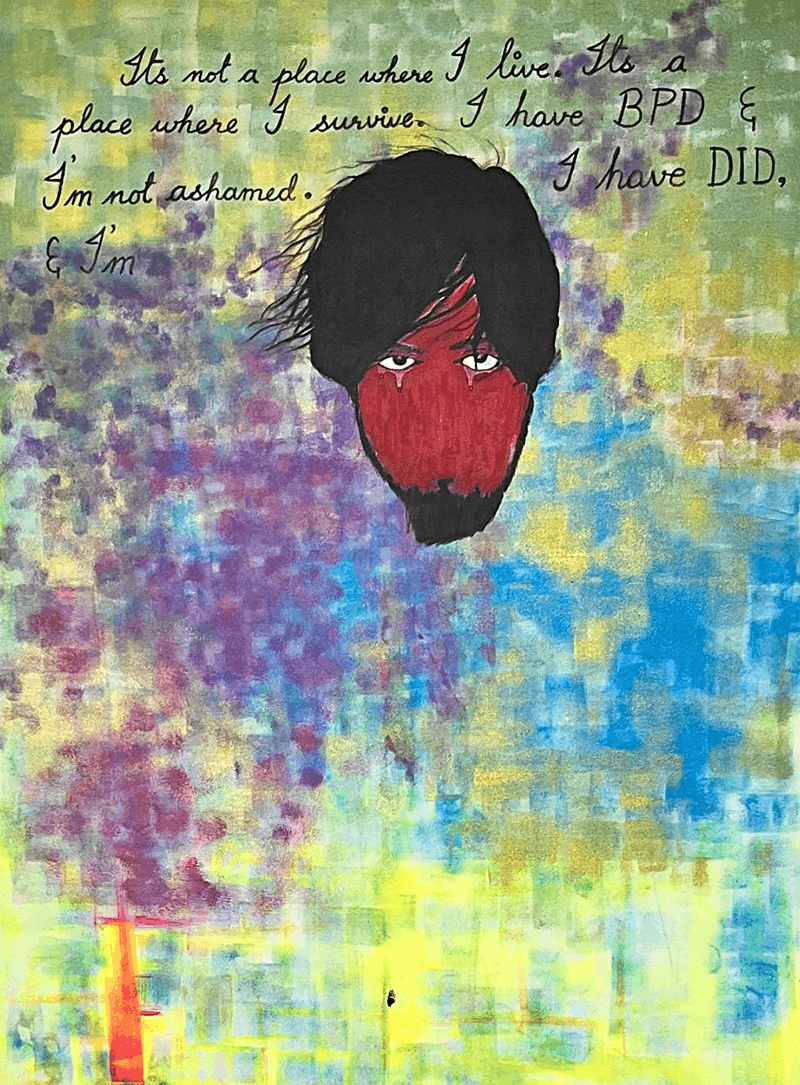
UNFINISHED
Acrylic on Canvas
90cm x 120cm
scream, I cry, I hurt in vain with tears of red running through my eyes. My face is straight showing no stinging ache, so the world believes the strength I bring. This painting is unfinished. The artist has Borderline Personality Disorder (BPD) and Dissociative Identity Disorder (DID). During its creation, a shift in personality occurred, preventing completion. The face appears composed, but the red streaks show hidden emotional and physical pain. The work reflects the tension between outward strength and inner struggle.
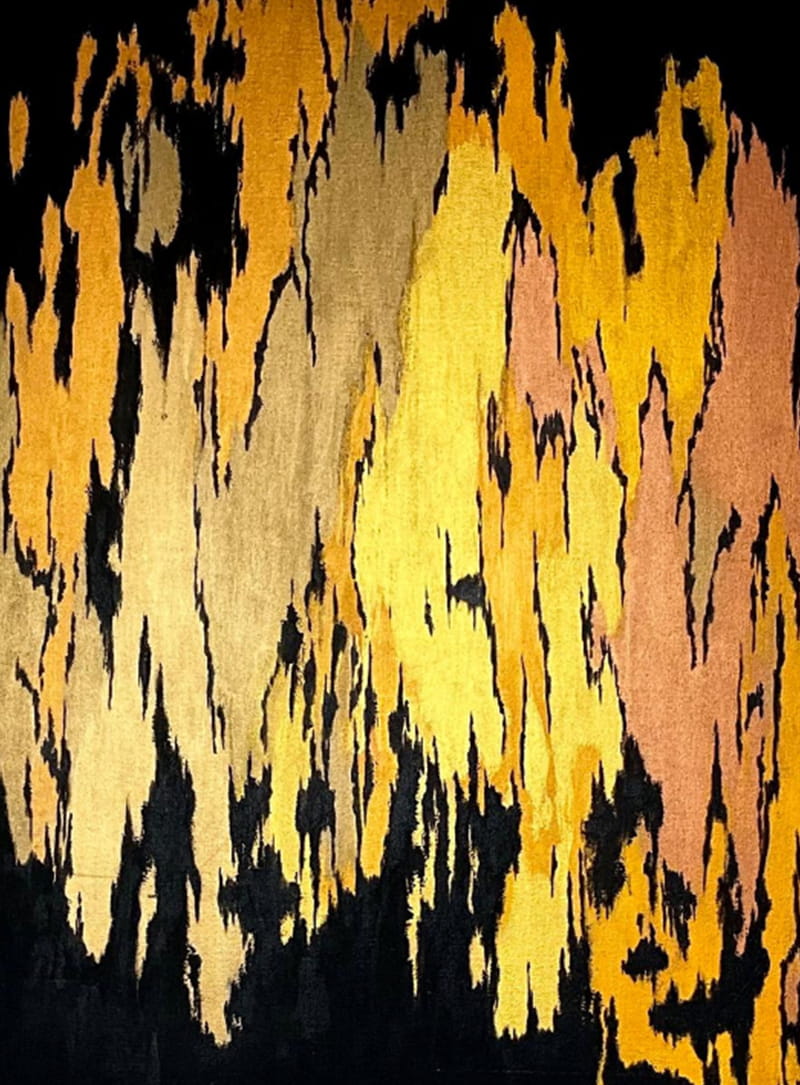
ABSTRACTS
Acrylic on Canvas
90cm x 120cm

The Golden Bind
Acrylic on Canvas
90cm x 120cm
This canvas is a seismic rupture, directly confronting the suffocation of authentic selfhood under imposed political and cultural order. The fragmented figures—one masked, one screaming yellow—embody the inner chaos of resistance. It offers a caustic critique of authority: mythology is reduced to a base commodity, and genuine sustenance is replaced by manufactured piety. The work is an immediate, unfiltered outburst against forces demanding conformity, reflecting a mind that finds stability through the very act of defiance. The Golden Bind demands we disturb comfort and face the raw, political urgency in the human psyche.

Color Breakdown
Acrylic on Canvas
90cm x 120cm
Color Breakdown is an unfiltered eruption of chromatic intensity, a portrait that is less of a figure and more of a psychic landscape pushed past its limits. The work embodies the artist's engagement with the complexities of emotional intensity, where the mind, under strain, experiences the world as heightened, fractured, and unstable. The visceral bleed of hyper-saturated hues—neons melting into streaks of red and purple—crystallizes the feeling of overwhelming internal pressure. It stands as a visual echo of an inner storm externalized, where anxiety is not an absence of control but an excess of signals the mind struggles to resolve. This painting demands a confrontation, using raw color to disturb comfort and expose the restless, unfiltered energy of being human.
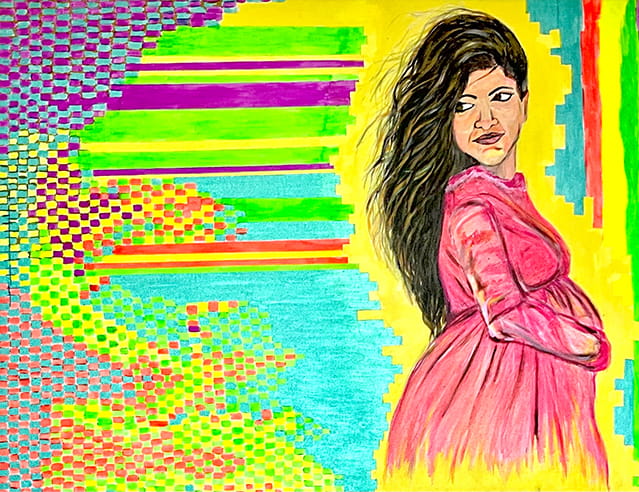
Convergence
Acrylic on Canvas
90cm x 120cm
Convergence is an unflinching portrait of feminine resilience against a fractured, digitized reality. The pregnant subject, rendered in flowing, visceral color, embodies the transformative power of life and creation. Her unyielding gaze asserts the strength inherent in her state. The background dissolves into a chaotic, pixelated matrix, a powerful metaphor for the pervasive pressures of the modern environment. This painting embodies the tension between the internal, emotional reality of life and the external, fragmented demands of society. It is a confrontation, asserting the primacy of human experience against any system that seeks to oversimplify or suppress it. The work celebrates the quiet, powerful rage and the enduring force of womanhood
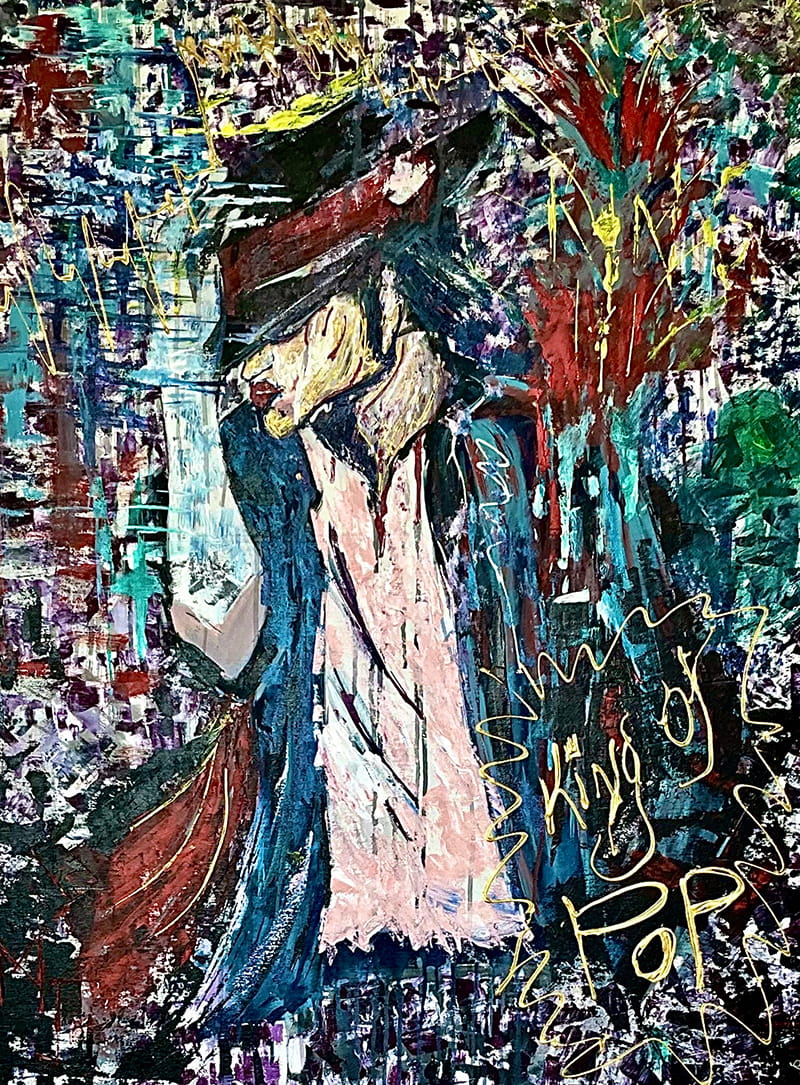
Requiem for a King
Acrylic on Canvas
90cm x 120cm
Convergence is an unflinching portrait of feminine resilience against a fractured, digitized reality. The pregnant subject, rendered in flowing, visceral color, embodies the transformative power of life and creation. Her unyielding gaze asserts the strength inherent in her state. The background dissolves into a chaotic, pixelated matrix, a powerful metaphor for the pervasive pressures of the modern environment. This painting embodies the tension between the internal, emotional reality of life and the external, fragmented demands of society. It is a confrontation, asserting the primacy of human experience against any system that seeks to oversimplify or suppress it. The work celebrates the quiet, powerful rage and the enduring force of womanhood
